
Cut Through the Noise

We deliver sharp, unbiased critiques of today’s media landscape so you can stay informed, empowered, and ahead of the narrative.
Top 3 November Stories

Canada’s Economic Outlook Shows Modest Growth, But Recession Risk Looms
What happened:
According to Royal Bank of Canada (“RBC”), Canada’s economy appears to have grown at about +0.5% annualized in Q3 2025, a partial rebound after a 1.6% decline in Q2. RBC
But simultaneously, a survey by Bank of Canada (the “BofC”) of market participants suggests Canada still faces a material risk of recession within the next six months. Global News
Why it matters:
Canada’s economy being so muted (and vulnerable) matters not just for domestic policy (jobs, housing, public finances) but also because Canada is deeply integrated with the U.S. economy and global trade.
If a recession hits Canada, U.S.–Canada trade flows, investment sentiment, resource/commodity markets, and cross-border supply chains could all be impacted.
For your interest in SaaS, infrastructure and creative hub plans: a weaker Canadian economy could mean slower business investment, tougher financing, and more caution in hiring/expanding.
What to watch next:
Upcoming Canadian GDP data, unemployment and real-wage trends.
How the BofC responds — rate cuts? Or staying cautious due to inflation/housing risks.
Spill-over effects to the U.S. (especially border trade, energy/commodity sectors, investment).
For your infrastructure focus: how government-investment plans adjust to weak private sector momentum.

U.S. - Canada Trade Tensions Escalate Under U/S Tariff Threats
What happened:
The U.S., under Donald Trump, is escalating trade pressure on Canada, with tariffs and broad threats. A recent article frames it as a standoff: Canada’s exports, tourism and cross-border trust are being hit. The Fulcrum
Canada’s premiers told the federal government that “infrastructure, U.S. trade talks” are top priorities in their meeting with the Prime Minister. Global News
Canada is also investing significantly ($6 billion) in trade & transport infrastructure to reduce reliance on the U.S. and unlock other markets. Canada+1
Why it matters:
The U.S.–Canada trade relationship has historically been one of the strongest globally. Significant tensions pose risks: for Canadian exporters, supply-chain stability, investment flows and macro outlook.
For the U.S., disrupting this relationship could raise costs for American firms (through supply chains), harm U.S. exporters to Canada, and inject broader geopolitical risk.
For your business context: if Canada shifts away from U.S. dependence in trade/investment, there may be new opportunities (or risks) for cross-border SaaS, creative/investment flows and asset acquisition (such as your farm/hub ambitions).
What to watch next:
Whether the U.S. follows through on tariffs – sectors targeted, magnitude, timelines.
Canada’s response: domestic policy, diversion of exports, trade deals with non-U.S. partners.
Impact on sectors you may care about: technology, resources (minerals), infrastructure, creative industries.
Whether this prompts a structural shift: Canada re-aligning trade towards Indo-Pacific or elsewhere.

Canada Deepening Trade/Investment Partnerships Beyond the U.S
What happened:
Canada and India are reportedly close to finalizing a US $2.8 billion uranium export deal, part of broader trade & strategic cooperation. Reuters+1
Canada has also resumed trade negotiations for a high-ambition Comprehensive Economic Partnership Agreement (CEPA) with India, with a goal to double bilateral trade to ~$50 billion by 2030. The Times of India
Separately, Canada announced major investment/stake initiatives with the UAE: direct flights, infrastructure & AI cooperation, sovereign fund investment. PM of Canada
Why it matters:
For years Canada’s economy and trade have been heavily tied to the U.S. This shift indicates a strategic pivot to diversify and reduce vulnerability to U.S. policy shocks (such as tariffs).
For your longer-term ambitions (creative hub, infrastructure, global platform) this opens new geographies and investment flows — good for diversification.
It also means Canada is positioning itself as a stronger player in the Indo-Pacific/Global South trade/investment architecture — which has implications for business models, investment sourcing, and competitive advantage.
What to watch next:
The formal ratification of key deals (uranium, trade agreements) and what sectors are opened.
How quickly Canada executes the infrastructure and investment commitments tied to these deals.
Whether Canadian firms (or Canadian-backed ventures) leverage these new partnerships — and whether your ventures might ride on new corridors of investment, especially in infrastructure, AI, creative industries.
How the U.S. responds: Will the U.S. try to block or counter these moves? Will there be pressure on Canada’s trade orientation?
Sunday News
〰️
Sunday News 〰️
Canada Prepares for Broader CUSMA Review as Trade Talks With U.S. Remain Frozen
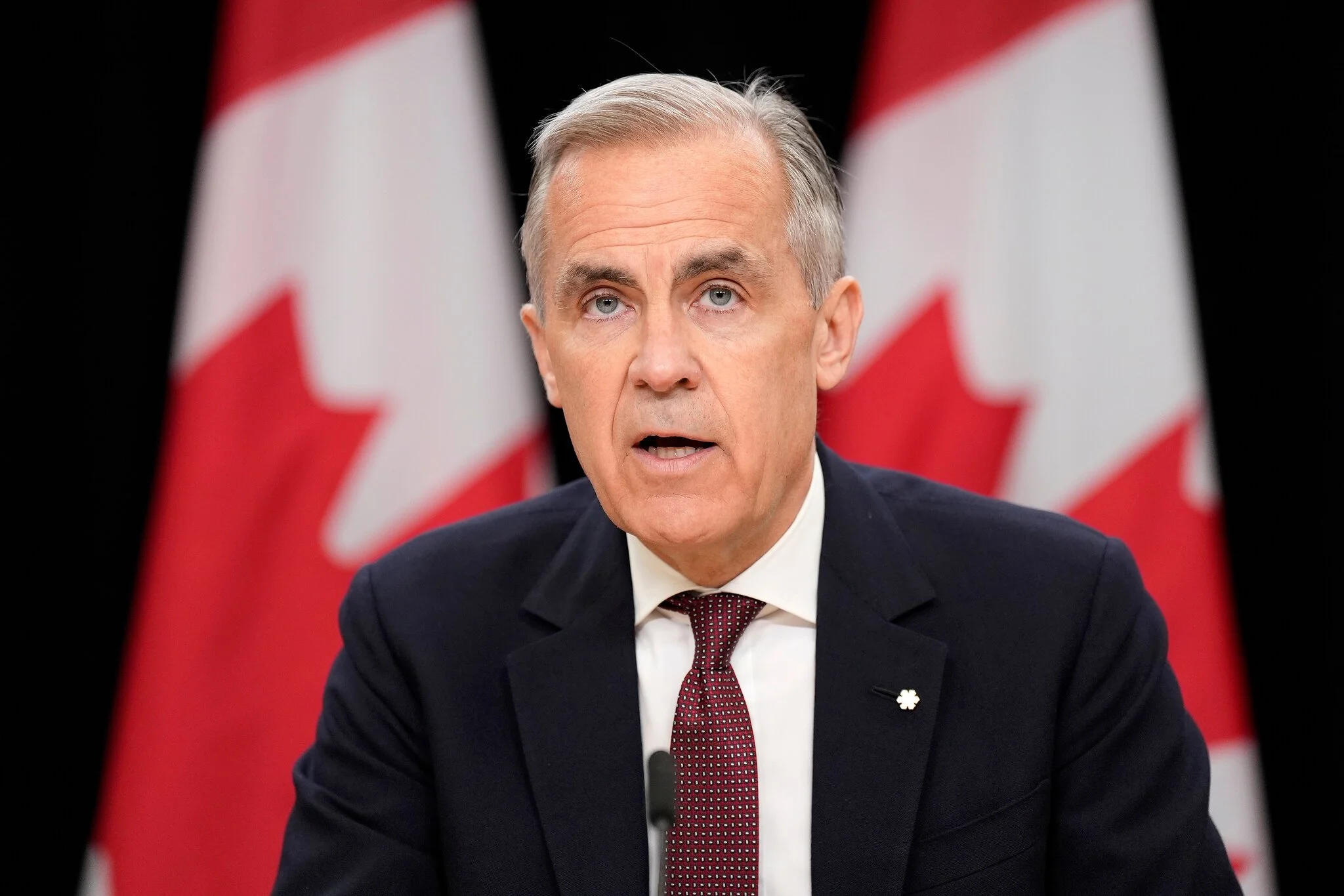
On Nov. 23, commentary surfaced that Canada is gearing up for the upcoming joint review of the United States–Mexico–Canada Agreement (USMCA/CUSMA) next year, even as immediate bilateral trade negotiations with the U.S. stay stalled.
CFJC Today Kamloops+1 The development points to Canada shifting focus from short-term talks to structural leverage via the trade-accord review process. For business investors this means policy risk and regulatory change loom ahead in Canada-U.S. trade relations.
.
Canada’s Top Diplomat Says Ottawa Working Fast to Advance India Trade Deal

On Nov. 24, Canada’s Foreign Minister Anita Anand announced that Canada and India will swiftly move toward a high-ambition trade deal after two years of strained bilateral relations.
ABC News This underscores Canada’s strategy of trade diversification beyond its traditional North American ties—relevant to global business and investment flows, including your interest in creative hubs and global platforms.
Monday News
〰️
Monday News 〰️
U.S. Trade Deficit Drops Nearly 24% in August as Canadian Concerns Mount
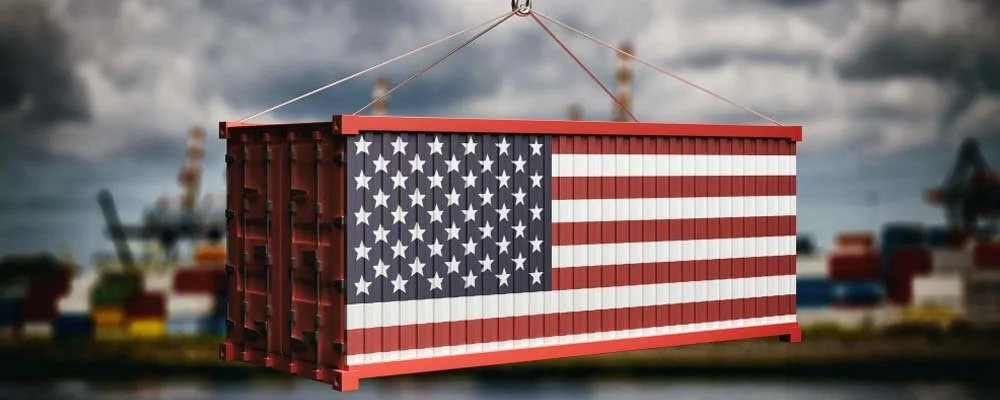
Also on Nov. 24, U.S. data revealed that the U.S. trade deficit fell nearly 24 % in August, attributed partly to declining imports from Canada and other sources amid tariffs and disrupted supply chains.
constructconnect.com The drop serves as an economic signal: U.S. import demand from Canada is weaker, which in turn suggests slower growth prospects for Canadian exporters, potentially impacting investment, currency, and business sentiment.
U.S. Senators and Canadian Officials Signal Need for Reset in Cross-Border Relations
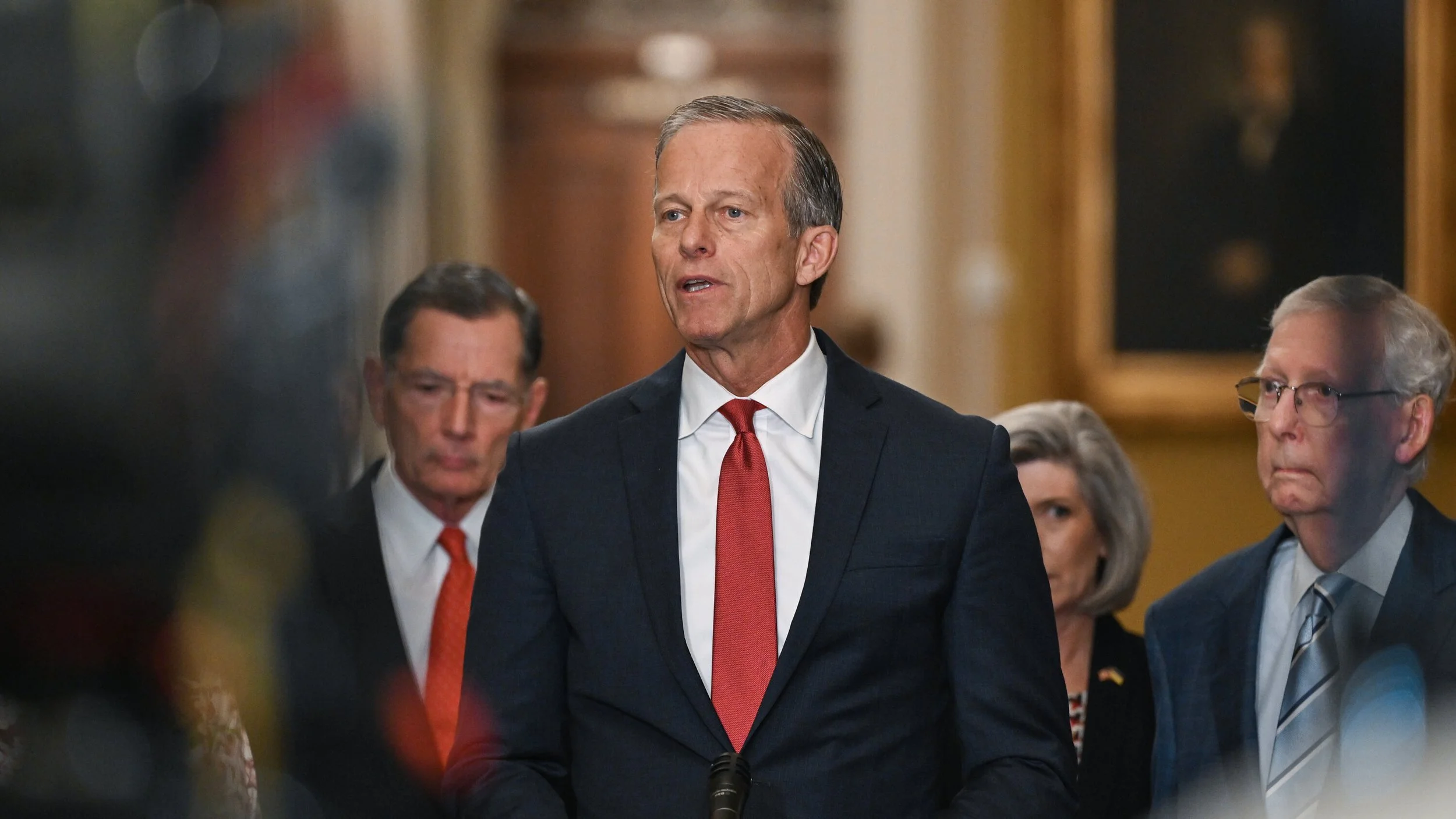
Also on Nov. 23, remarks at the Halifax forum indicated that both U.S. and Canadian officials acknowledge deep fractures in the bilateral relationship—particularly around trust, defence and trade.
While no single headline item, the cumulative remarks reflect a broader recognition that the “special relationship” is under strain.
The significance is in tone: policymakers are signalling that the status quo has changed, which affects long-term planning and bilateral frameworks.
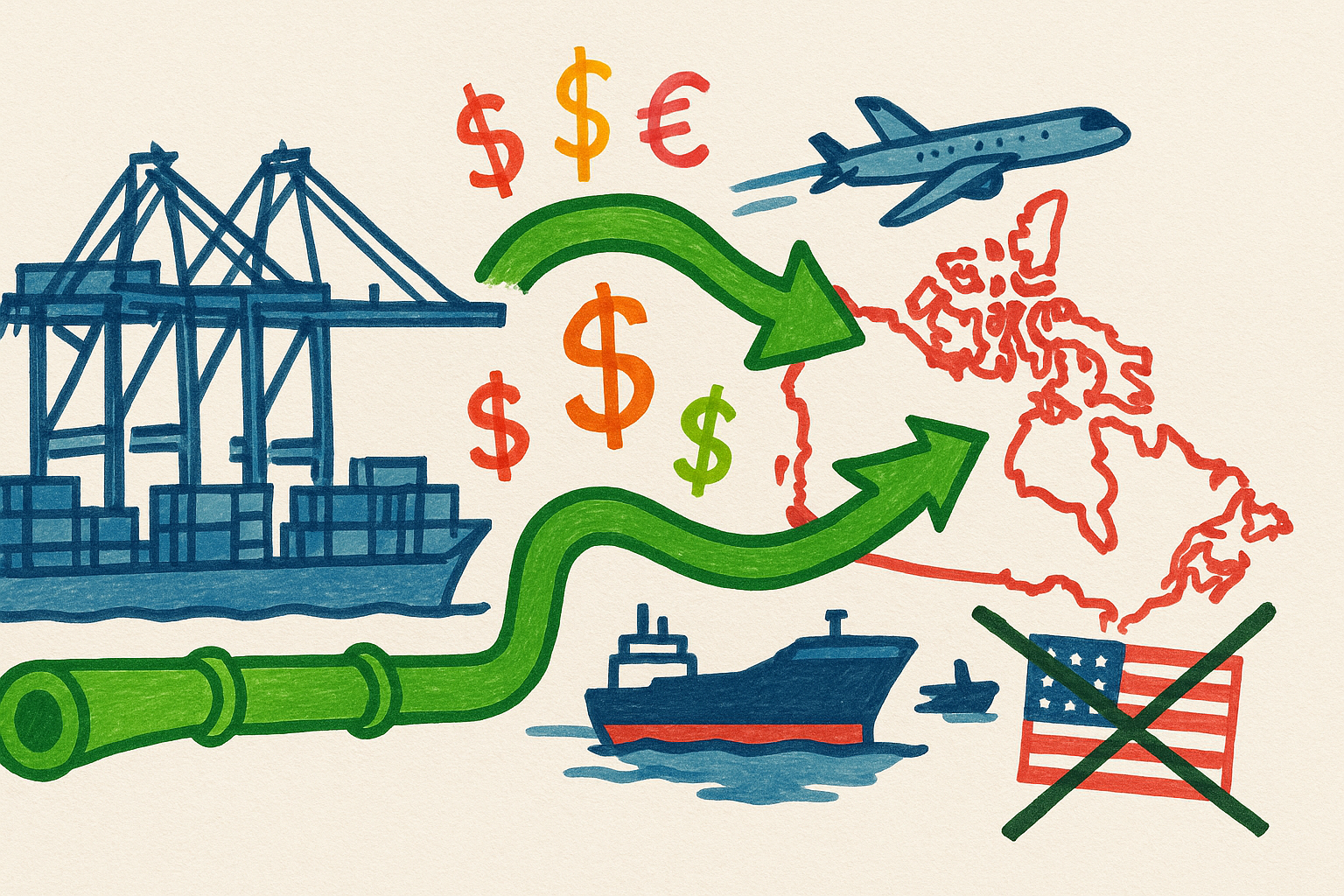
Canada launches CAD $6 billion infrastructure fund to double non-U.S. exports
Tuesday News
〰️
Tuesday News 〰️
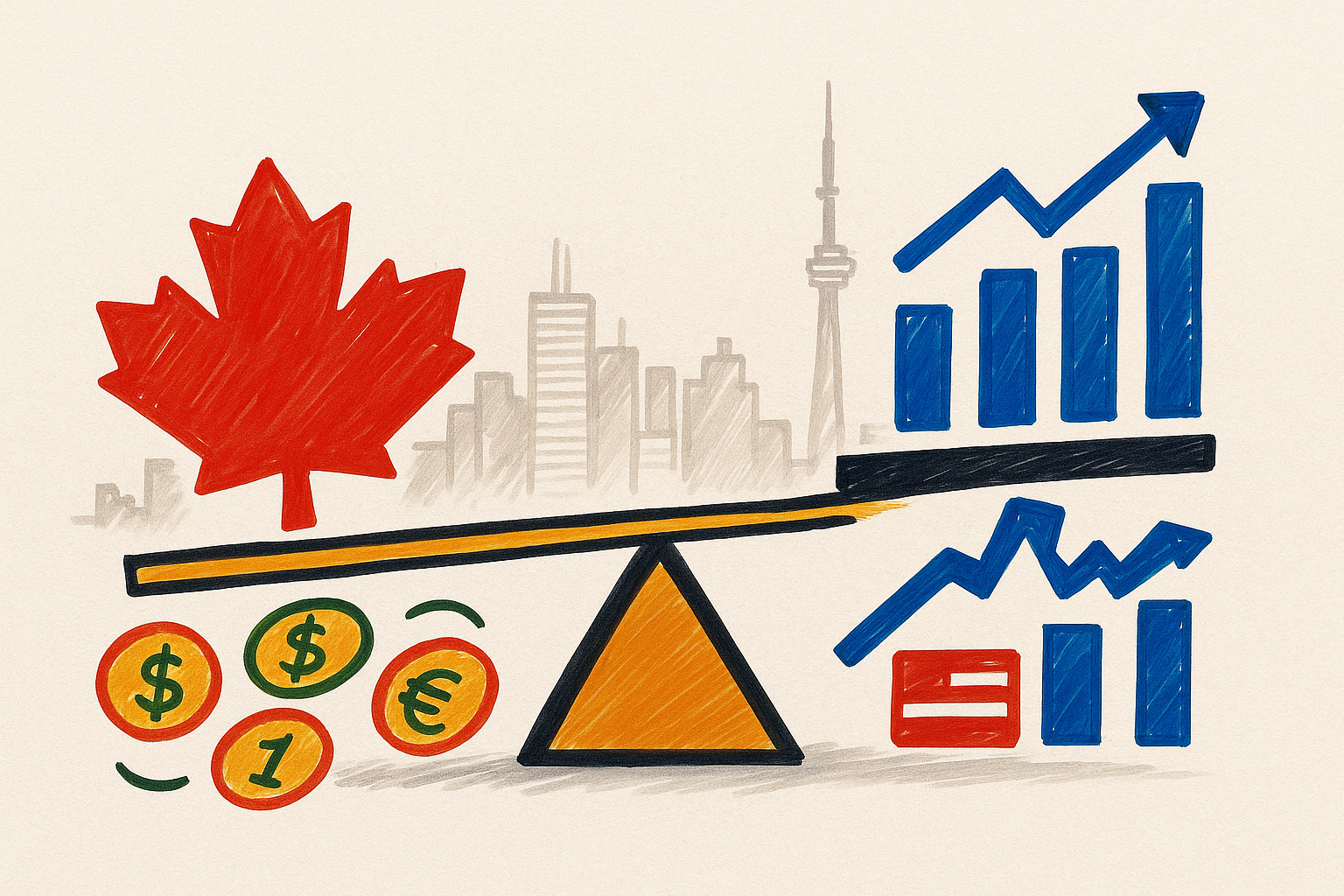
Maninder Sidhu, Canada’s Trade Minister, announced on Nov 25 that Ottawa is establishing a CAD 6 billion fund to build trade-and-transport infrastructure specifically to boost Canadian exports to markets outside the U.S.
constructconnect.com With Canada’s export share to the U.S. historically above 70 %, this shift signals a strategic pivot: Ottawa wants to reduce dependency on the U.S. and tap into growing markets abroad.
For business, infrastructure and global platform ambitions (like yours), this could open new corridors of investment, supply-chain diversification and global growth opportunities.
Canadian markets tread cautiously as U.S. economic data stirs hopes for Fed rate cut
Canada’s main stock index (the S&P/TSX Composite) edged higher on Nov 25, driven by gains in consumer-facing stocks even as energy shares dragged.
Reuters The movement reflects growing market expectations that the Federal Reserve may cut interest rates in December, prompted by weaker U.S. retail and consumer data.
For Canada and U.S.-linked businesses, this means financing conditions, currency risks, and investment flows are in flux — relevant for your SaaS business and any infrastructure/creative-hub build-out plans.
Wednesday News
〰️
Wednesday News 〰️
Ontario Considers Halting High-Rise Development Near Major Pharmaceutical Company
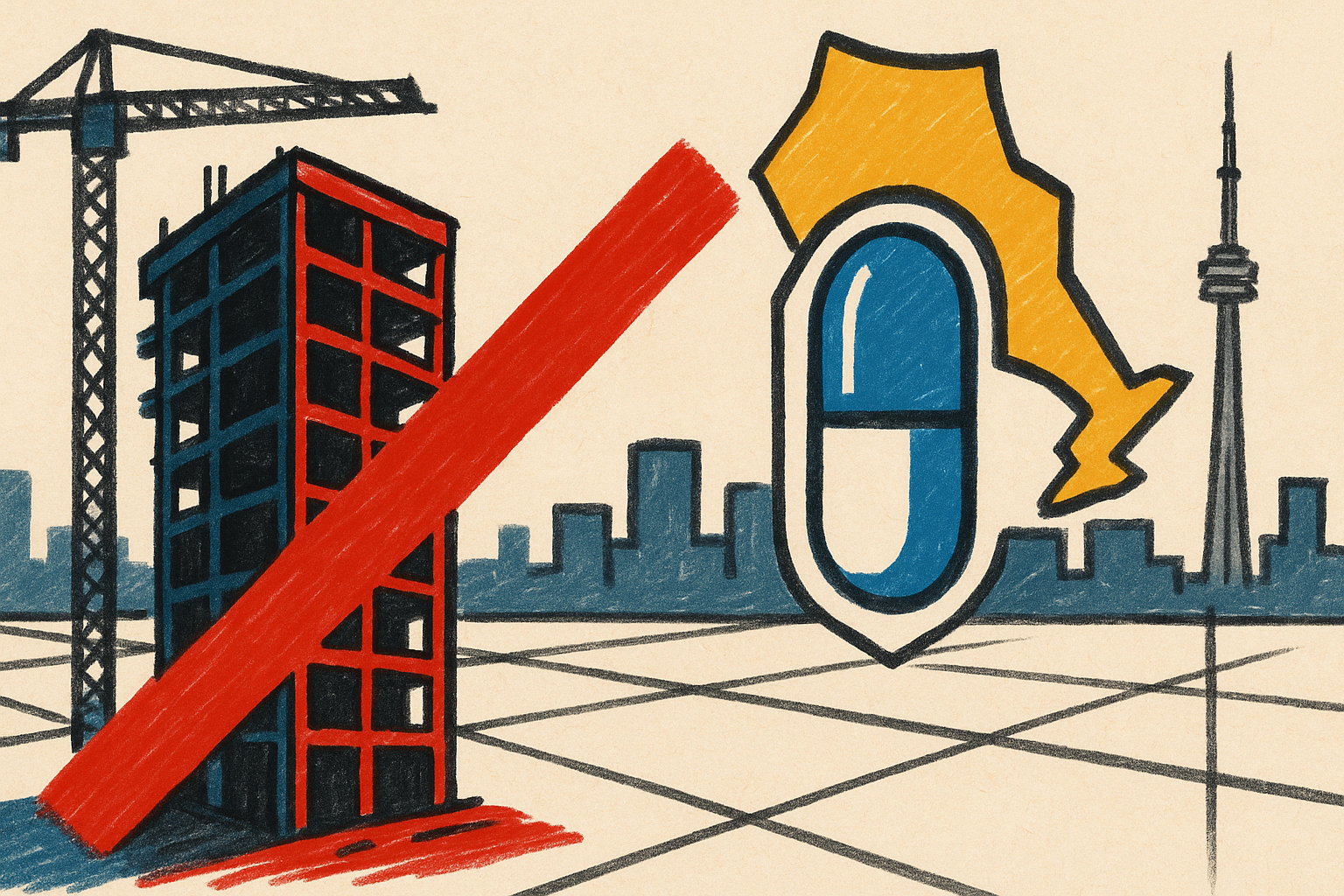
Another day, another dilemma within the housing market for residents of Ontario. The provincial government of Ontario has decided to halt the high rise development of new residential high rises near ‘Sanofi Pasteur’ pharmaceutical company’s grounds. On the CBC segment it was stated that Sanofi - a company which manufactures vaccines - wants to limit the risk of spying.
Of course The Toronto Brief would like to assume ‘spying’ is not one of the first issues that come to mind when one is asked about the problems that arise out of homes, residential high rises, or complexes; however, it does show a greater potential abuse of power. Residents could care less whether they are called spies, but to know that a private pharmaceutical company could jeprodize the construction or living plans of a person for a particular property/highrise is more debilitating.
On one hand it is indeed 2025, and young kids now have the power to fly drones from their window for fun, which could just go over top of a place like Sanofi and definitely constitute as informal spying. On the other end however, citizens looking for housing aren’t just surprised at prices anymore but the potential for certain locations to be blacklisted to them to maintain the sovereignty of a private company.
If this turns into a trend - more halts of residential properties for the preservation of space and security of private companies - what could it mean for Canadians and the real estate market? And in the long run is it a dynamic worth having even if we see exceptional innovations in health?
Canada Partners with Nokia to Expand National 5G and AI Innovation, Promises 300 New Jobs
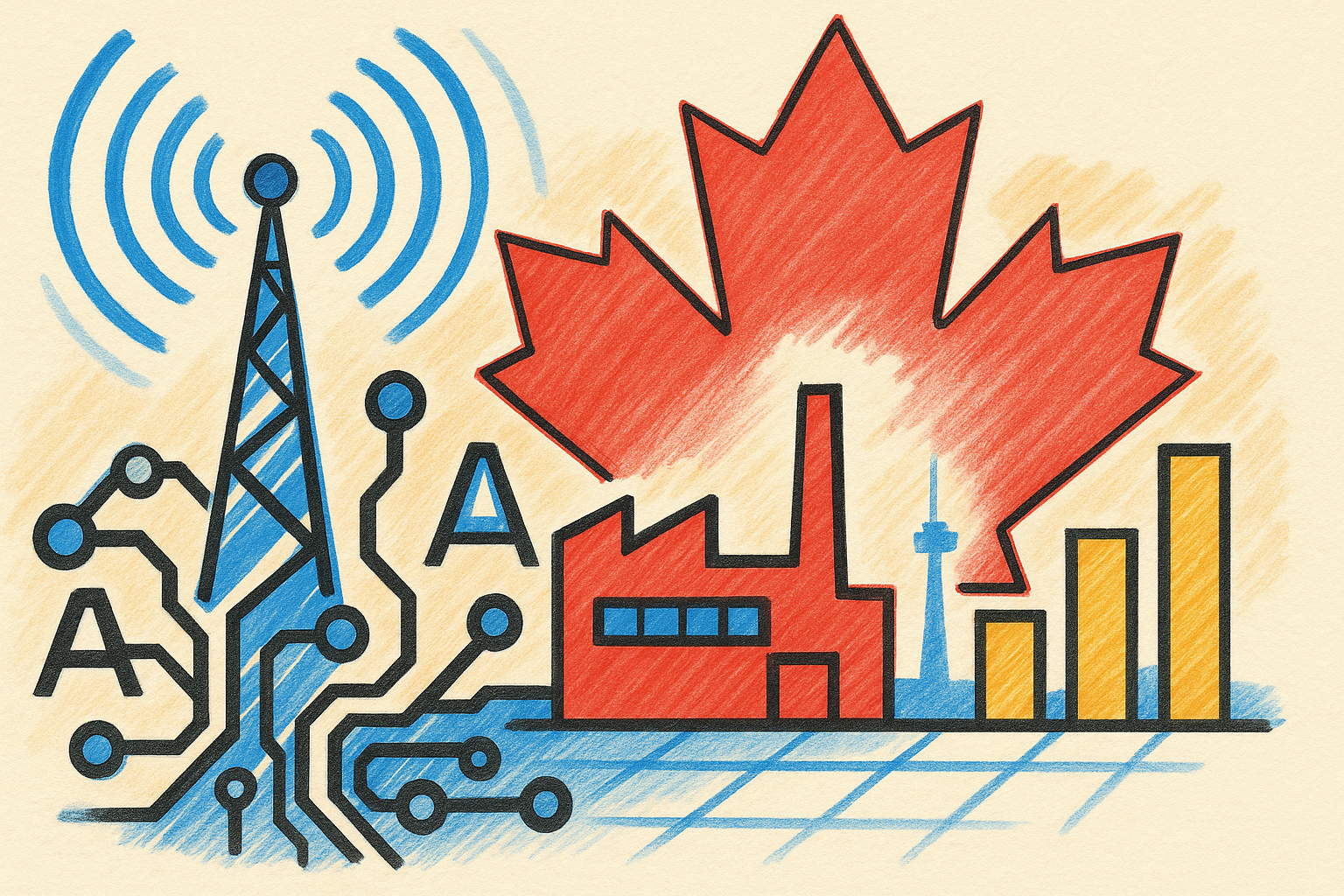
Last Thursday we covered a story on how Canada contributed in reaffirming the IceBreaker pact which included Canada, the U.S., and Finland. Now this week Canada has announced their partnership with Nokia - a Finnish telecommunications equipment, network infrastructure, and technology development company - to work towards a project and plan to ‘bring transformative economic and technological benefits to Canadians’ and that by 2040 this project and investment in R&D (research and development) will bring 200 billion to the economy.
This is an interesting story to say the least - if you are into technology… But for the average Canadian citizen when they see 200 billion to the economy by 2040 and only an estimated 300 jobs created, some may feel a bit underwhelmed. Here at The Toronto Brief we partially agree with the plan, but disagree with aspects of the promises on sovereignty and want to present a new perspective to look at this story with.
Canada as a nation is lagging behind countries like the U.S., China, and areas within the U.K. when it comes to technological innovation and data sovereignty. For example, the most popular social apps like Facebook and X are based in the notorious Silicon Valley, San Francisco. Which means while the Canadian government would love to receive all of the data - good or bad - that their citizens see and produce, it always goes to the Tech Giants outside the country first, not to mention the CEO’s having final say. While this 5G AI Innovation plan with the help of Nokia is out of good spirit and encourages national adoption to new technological horizons, it does not directly stem out of a Canadian company or ensure improved data and digital sovereignty for Canadians from what we can currently see. This is most likely because it will enhance Canada’s IT and network efficiency opposed to digital independence - the average citizen will still be using the same apps and websites from google to instagram, only with faster connectivity following this plans completion and process to completion - unless, Canada brings in some more technological projects..
In comparison to China and their recent 5.5G / 5G-Advanced networks which are 5-10x faster it is a worthy investment to pursue as Canadians. On the flip side true digital sovereignty does not come as a consequence of this project, and if jobs are a priority there is a way to truly kill two birds with one stone (digital sovereignty and jobs). One option would be by making Canadian based social apps that are as useful, fun, and as socially connected as the Facebook’s and Instagram’s. China has done exactly that, with their Little Red Book app (Xiaohongshu) and WeChat, they have centralized Chinese digital activity to the home court, all while providing more jobs and in turn creating a culture (not everywhere in china but in the important areas) where technological fluency is improved due to the job creation, which only comes with China made tech apps - which aim to hire their own citizens. Collectively these two Chinese apps for Chinese citizens boast around 7,000 employees collectively - not including parent companies. And instead of 15 years, those apps only took 70 days for Wechat and 7 months for Little Red Book.
With that being said, what do you think? Though its a national project made with good intent, would you rather invest 200 billion to improve IT and network efficiency, or 10 million into 2 apps that will generate a solid 7,000 Canadian jobs and blooming tech culture? Of course, you would still have a mere 199 billion to spare on IT if you choose to add 300 more jobs.
Thursday News
〰️
Thursday News 〰️
Canada Ramps Up Space Agency Investment in Europe Amid Trade Uncertainty
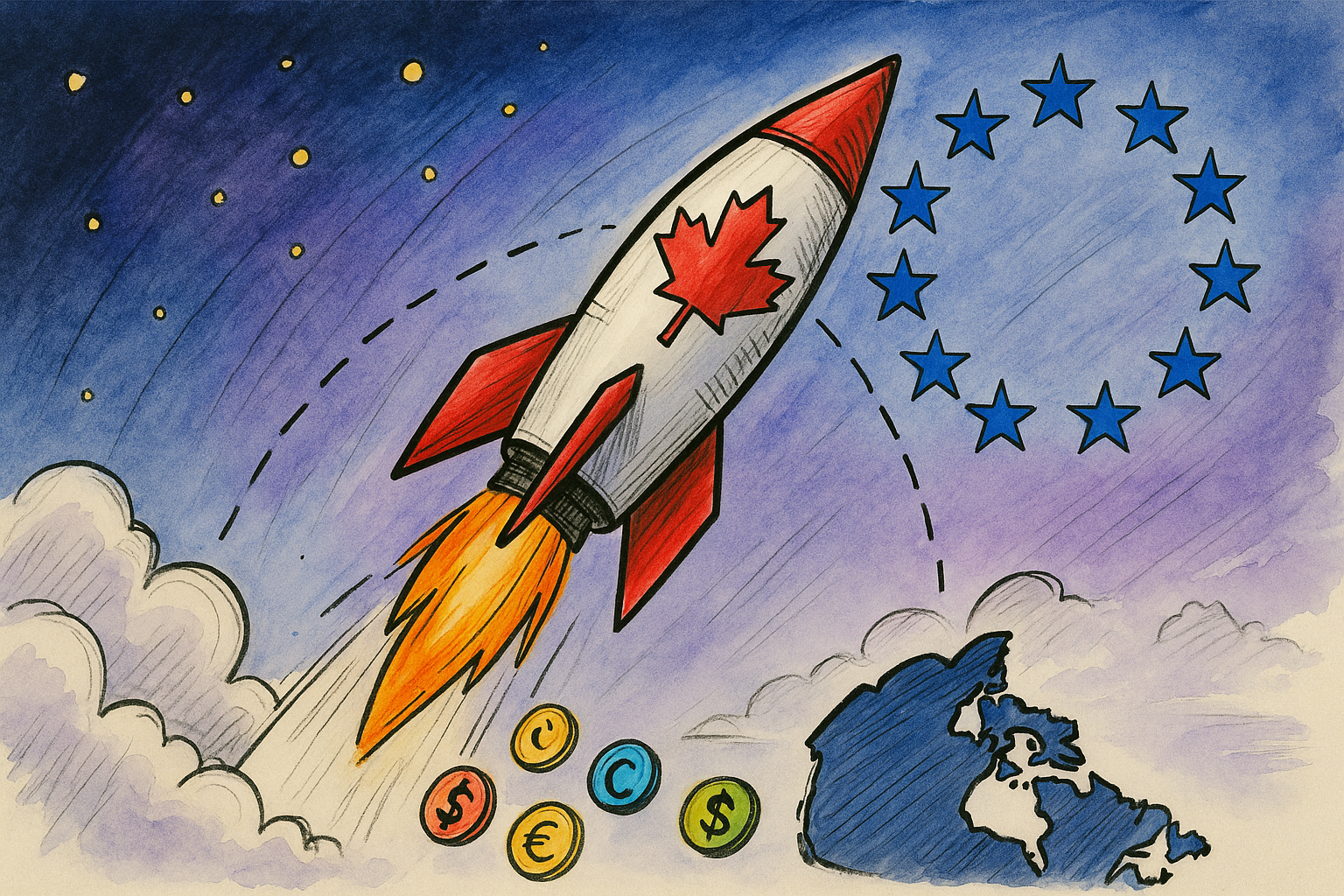
On Nov. 20, Canada announced it would increase its investment in the European Space Agency (ESA) by more than ten-fold—committing approximately CAD 528.5 million (~USD 376 million) over 3-5 years.
The move appears driven by broader trade uncertainty — especially with U.S. tariffs — and reflects Ottawa’s push to diversify international partnerships beyond the U.S. in science, technology and defense.
For Canada the investment signals a strategic pivot toward Europe and demonstrates how trade frictions are influencing long-term industrial and innovation policy.
U.S., Canada & Finland Reaffirm Icebreaker Pact; Trade Talks Remain Frozen

Although reported Nov. 18 originally, additional coverage noted that as of Nov. 20 the trilateral icebreaker pact (ICE Pact) continues to be emphasized even while Canada-U.S. trade negotiations sit in the deep freeze.
The juxtaposition of deep strategic collaboration (Arctic/defence) with stalled economic/trade diplomacy highlights the messy nature of bilateral ties: alliance in one domain, friction in another.
Friday News
〰️
Friday News 〰️
Canada’s Prime Minister Seals New UAE Investment & Trade Agreements

On Nov. 21, Mark Carney announced major trade and investment agreements between Canada and the United Arab Emirates, positioning Ottawa’s strategy toward diversifying exports and foreign direct investment.
The new deal underscores Canada’s ambition to reduce reliance on the U.S. market and reset global economic partnerships.
This reflects Canada seeking to unlock new investment corridors beyond traditional North American boundaries.
GOP Senator Demands Canada Pay $300 B for NATO Defense Short-fall
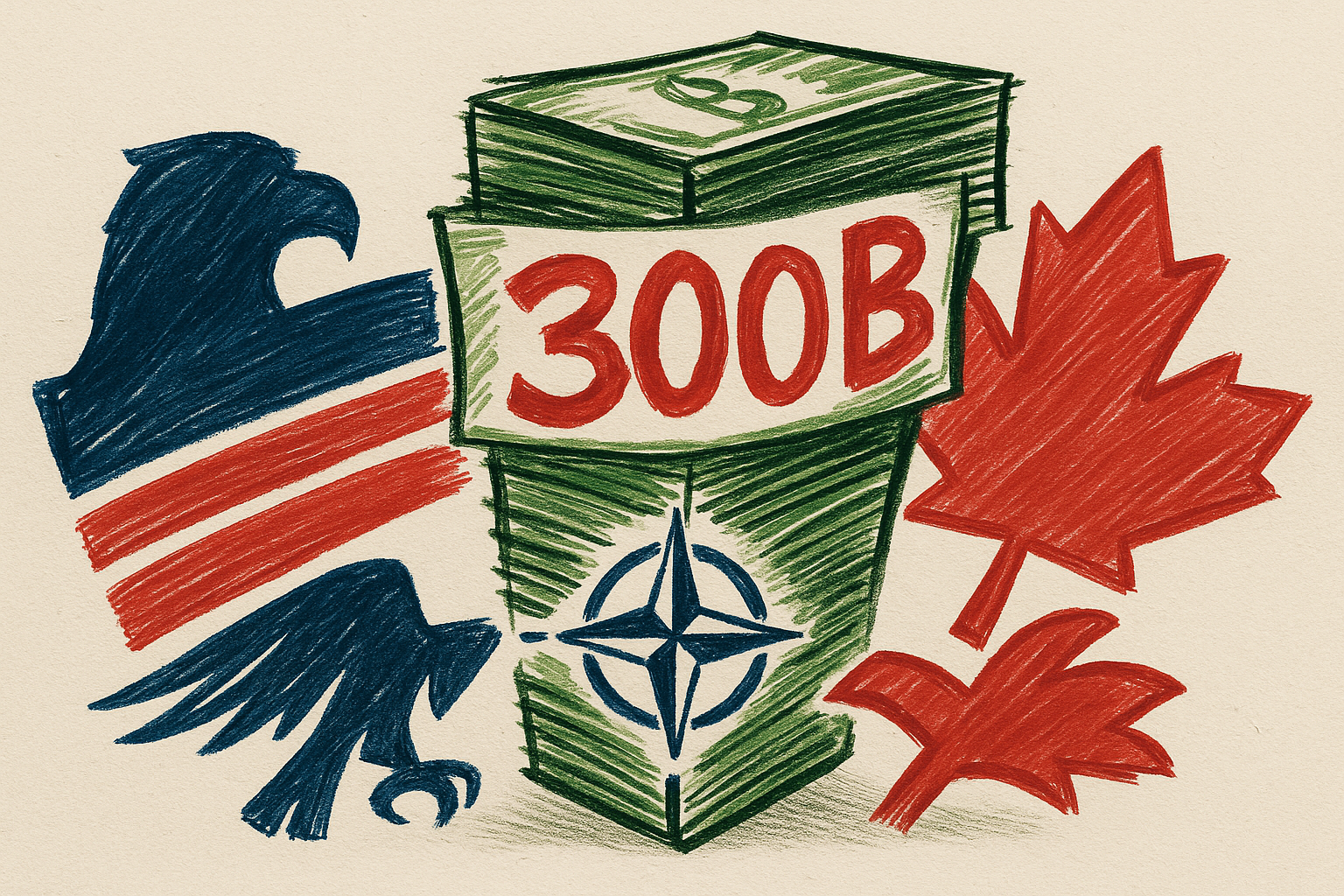
On Nov. 21, during the Halifax International Security Forum, U.S. Republican Senator Thom Tillis publicly demanded Canada repay “$300 billion in defense dues” for not meeting NATO’s 2 % GDP defence spending target over past decades.
Politico The challenge highlights growing irritants in defence/strategic domains between the neighbours. It signals potential pressure on Canada’s defense budgeting and how bilateral ties are being tested in security and treaty arenas—not just trade.
Saturday News
〰️
Saturday News 〰️
U.S. Senators Say Tariffs are Causing a ‘Cultural Break’ in U.S.–Canada Relations

On Nov. 22, U.S. senators participating in the Halifax forum stated that the ongoing U.S. tariffs on Canadian goods are not only damaging the economy but also eroding cross-border social and political trust, calling it a “cultural break.”
CityNews Vancouver The sentiment suggests that the trade war is spilling over into the broader fabric of the Canada-U.S. relationship.
For Canada it means the stakes go beyond economics: identity, neighbourliness and public perception are at risk..
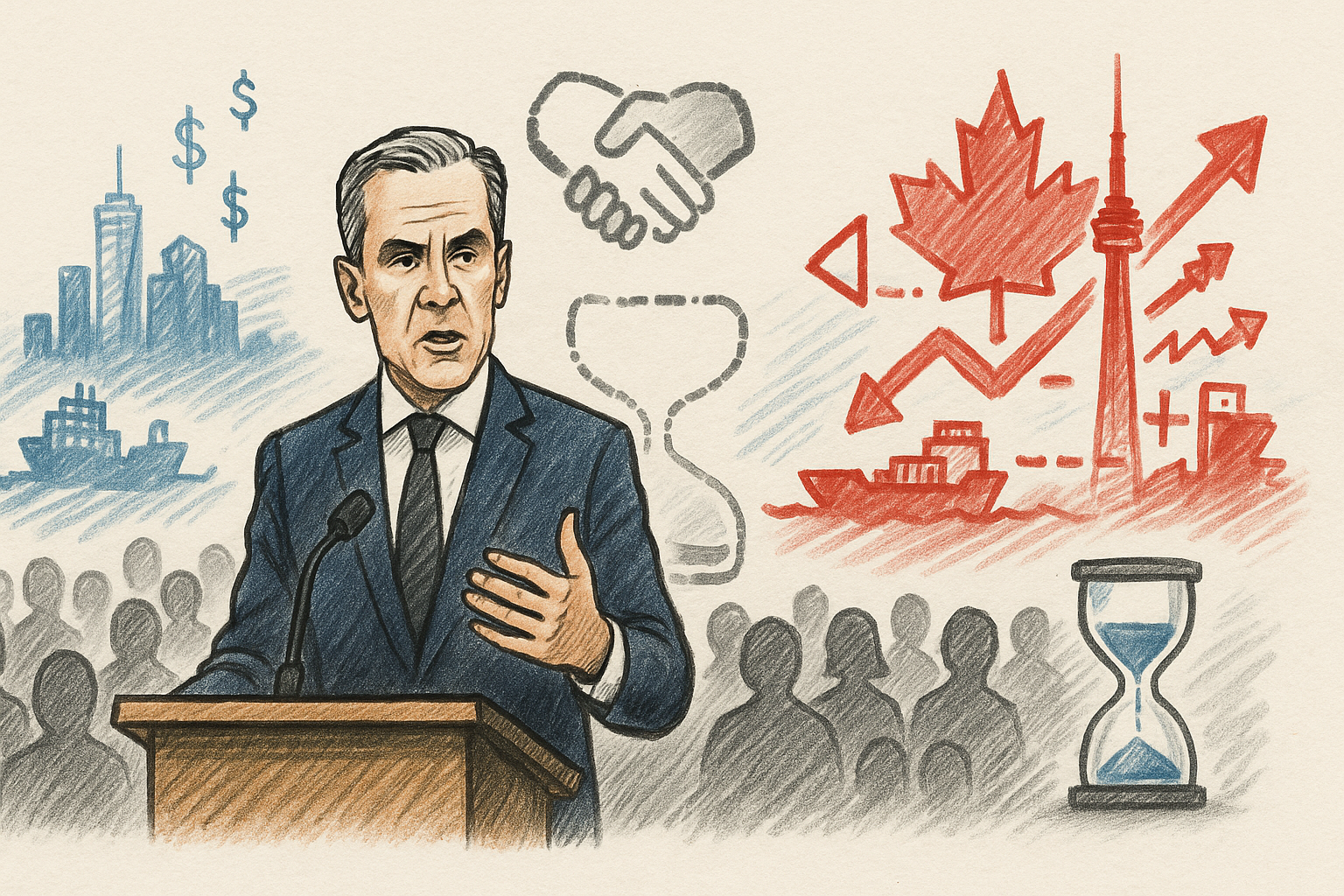
Canada Says It Will Resume U.S. Trade Talks ‘When Appropriate
On the same day, Canada formally communicated that it is ready to resume trade talks with the United States “when appropriate,” signalling a cautious reopening but without urgency.
Reuters The phrasing suggests Ottawa is holding strategic leverage, delaying engagement until favourable terms emerge—indicating a more assertive posture in the bilateral trade relationship which may benefit your interests in diversified global platforms.
Follow Us On Social